Automated Crawling vs. Manual Tag Testing: Scaling Enterprise Audits
Validating digital analytics implementations has traditionally been a manual chore. A Quality Assurance (QA) analyst opens a browser window, triggers a series of actions on a page, opens a network sniffer or a specialized browser extension, and manually reviews whether specific pixels fired off to Adobe Analytics, Google Analytics, or ContentSquare.
While this hands-on approach is functional for a localized three-page marketing site, it completely breaks down under the scale, velocity, and regulatory constraints of an enterprise web asset.
The Mathematical Failure of Manual Sample Testing
Consider a typical global banking or enterprise enterprise platform consisting of 500+ public pages, dynamic single-page application paths, and localized regional domains.
If a manual tester spends just 3 minutes inspecting the core tag configurations of a single page, completely auditing the site would require 40+ hours of uninterrupted, error-free human concentration. Because this is operationally impossible, enterprises resort to sampling, testing the homepage, two product listings, and a primary application form.
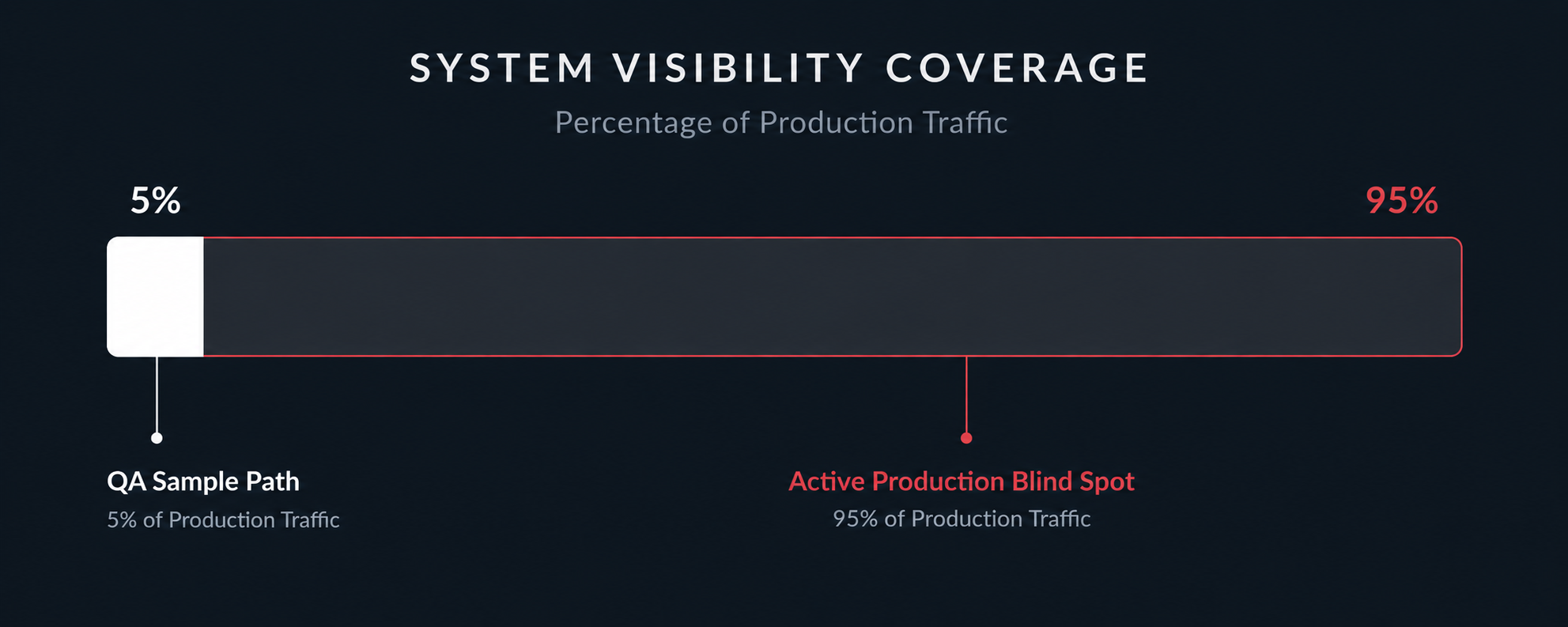
This leaves over 95% of the enterprise footprint completely unmonitored. When a front-end code update silently corrupts a data layer variable on a legacy page or a specific sub-product lane, that blind spot can persist for months, leading to permanent data loss and corrupted historical performance reports.
The Risks of Human Error in Complex Schemas
Enterprise tag auditing is not merely checking if a tag is “present.” It requires verifying structural compliance against complex parameter specifications. A standard enterprise analytics payload can pass dozens of variables simultaneously:
- Unique transaction IDs
- Strict compliance and privacy consent states
- Dynamic product array strings
- Custom conversion dimensions
A human analyst scanning an extension console can easily overlook a missing nested property, a minor syntax mutation, or an unescaped character string. Furthermore, manual testing cannot effectively simulate multi-step session states across varying device viewports or user permission levels at scale.
The Architecture of Automated Crawling Audits
A specialized tag auditing crawler replaces human sampling with programmatic validation. Rather than hoping a random check uncovers an issue, the crawler executes systematic verification across the entire ecosystem.
| Metric / Capability | Manual Extension Testing | Automated Crawler Auditing |
|---|---|---|
| Coverage Scope | Limited sampling (Typically < 5% of URLs) | Full footprint (100% of visible paths) |
| Execution Velocity | ~3 to 5 minutes per page | Hundreds of pages parsed per minute |
| Schema Validation | Visual comparison by an analyst | Programmatic validation against JSON schemas |
| Rogue Script Detection | Unreliable; relies on human tracking | Instant identification of unknown network requests |
| Audit Continuity | Ad-hoc or per major release | Continuous, scheduled regression scanning |
programmatic Enforcement of Tag Integrity
An automated auditing crawler executes headless browser sessions at scale, traversing the site’s architecture map while executing custom validation routines on every single page load. It extracts the raw runtime variables, ensures tag payloads match your exact specifications, and isolates unauthorized third-party scripts that violate security governance rules.
By offloading the inspection architecture to a dedicated crawler, enterprises eliminate human error, protect data integrity before corrupted schemas pollute product analytics models, and ensure continuous visibility into their global tagging infrastructure.
← Back to Blog